Policy Working Groups
The Canadian American Business Council’s Policy Working Groups are member-driven initiatives that focus on key policy issues across a range of sectors. These groups meet quarterly, offering members a platform for intelligence sharing, shaping the Council’s messaging, and fostering deeper collaboration.
The CABC and its members of the Aerospace and Defense Group aim to advance policies that encourage continued cooperation between the United States and Canada in defense strategy. This includes advocating for the strategic importance of Arctic Security, ensuring a resilient, effective, and cooperative industrial strategy, and fostering innovation. Our key policy focuses are as follows:
Continental Security: The Arctic region is of increasing strategic importance due to its vast natural resources, emerging shipping lanes, and the effects of climate change. The Working Group promotes ongoing investment in strengthening our joint continental security. This includes investments in NORAD and in NATO, as well as empowering public-private partnerships between the defense sectors and Indigenous populations in the Arctic region.
Integrated Defense Industrial Strategy: The Working Group advocates for an integrated industrial defense strategy to ensure strong cooperation and stability. This includes the ability of both U.S. and Canadian companies to be treated as domestic suppliers in each other’s defense procurement processes and promoting a skilled workforce that ensures the North American advantage in national and economic security.
Fostering Innovation: The Working Group advocates for policies that foster innovation through shared research and development efforts as well as fostering a skilled workforce, through both government investment as well as better enabling labor mobility between the U.S. and Canada.
The CABC and its members of the Agri-Food Working Group aim to strengthen the agricultural bilateral relationship between the United States and Canada through policies that strengthen the agri-food supply chain and ensure collaborative dispute resolution. Our key policy focuses are as follows:
- Strengthening Supply Chain Resilience: This Working Group advocates for targeted improvements in transportation infrastructure, border processing, and trade facilitation measures to ensure seamless and resilient food supply chains between the U.S. and Canada. The Group prioritizes regulatory alignment in areas such as food safety standards, inspection procedures, and labeling requirements to minimize trade barriers and enhance efficiency in agri-food trade.
- Dispute Resolution Mechanisms: The Working Group encourages strengthening dispute resolution mechanisms to ensure trade irritants can be addressed promptly and effectively. This includes proactive mitigation strategies through U.S.-Canada working groups for stakeholders, including industry and the agri-food workforce, to share concerns and strategies for collaborative solutions.
The CABC and its members of the AI Working Group aim to advance policies that manage productivity gaps, promote the adoption of AI technology, and encourage interoperability between the United States and Canada, as well as global allies. Our key policy focuses are as follows:
- Promoting Proportionate, Context-Based, and Risk-Based Governance: The Working Group encourages simplifying the regulatory environment for businesses in the United States and Canada to be best positioned as global leaders in AI. This includes the development of technologically neutral and risk- and principles-based legislation.
- Ensuring Interoperability and Reducing Compliance Costs: The Working Group encourages both governments to create bilateral alignment on AI regulation and work with allied nations to ensure sound global standards. Differing regulation methods result in compliance burdens that stifle innovation and threaten interoperability across North America. The Working Group stands against policies that directly and disproportionally target U.S. and Canadian businesses.
- Driving Economic Growth and Innovation: The Working Group promotes policies that enhance workforce development, upskill workers, and equip businesses with the talent needed to maximize AI’s benefits. A future-ready workforce is essential for maintaining North America’s competitive edge. This includes supporting policies that drive the adoption of North American AI scale-up, enable pilot projects, validate value propositions, and accelerate growth.
- Scaling Compute Infrastructure & Energy Resources: AI adoption requires robust compute power and access to reliable energy sources. The Working Group advocates for investments in data center capacity and cross-border digital infrastructure that support AI growth.
The CABC and its members of the Border Working Group aim to continuously bridge domestic best practices from both Canadian and U.S. jurisdictions in support of synchronous border management. Our key policy focuses are as follows:
- Streamlining and Ensuring Ease of Travel: The Working Group advocates for a risk-based approach to border enforcement that fosters innovation, infrastructure improvements, and streamlined processes which will facilitate the efficient movement of people, goods, and services. Efforts will focus on harmonizing regulations, optimizing airport and land border procedures, and fostering collaboration between government agencies and industry stakeholders to ensure a seamless travel experience.
- Weather Disaster Response and Infrastructure: The increasing frequency of weather-related disasters underscores the need for resilient border management solutions. The Working Group aims to develop operational solutions concerning recovery responses to ensure ease of travel during emergency situations, which includes investment in infrastructure.
- Pre-Clearance and Trade Facilitation: The Working Group aims to create increased continuity between Canada and U.S. pre-clearance with air, water, and land borders, ensuring greater continuity in the movement of people, goods, and services. Expanding pre-clearance agreements and increasing personnel at ports of entry will help streamline cross-border commerce and improve economic efficiency.
The CABC and its members of the Cyber Working Group focus on shaping policy recommendations to ensure the Canadian and U.S. federal governments invest in cyber as it relates to defense and security as well as innovation. Our key policy focuses are as follows:
- National Security and Information Sharing: In the context of national security, this Working Group advocates for a proactive approach to information sharing. Information sharing is influential in ensuring the United States and Canada are equipped to address threats in a timely and secure manner, not only between our two governments, but between the public and private sectors. This includes recognizing the impact of artificial intelligence (AI) on cybersecurity and the need for AI-driven security solutions that enhance cyber resilience and adaptability in our joint digital infrastructure.
- Harmonized Cybersecurity Certification Standards: The Working Group recommends that Canada and the United States work towards non-discrimination in cybersecurity measures through harmonized policies and enhanced cooperation to help bolster and secure our joint digital infrastructure.
- Competitiveness: The Working Group advocates for strategic investment in cybersecurity innovation, including in talent development and infrastructure. The Working Group encourages government investments for companies pursuing research and development, creating opportunities for scale-up, and national commitments to making talent development in the cyber workforce a priority. Recognizing the unique challenges faced by small and medium-sized businesses in maintaining robust cybersecurity, the Working Group also emphasizes the need for tailored support in strengthening their cyber capacities and digital defenses.
The CABC and its members of the Energy Security Working Group aim to promote the United States’ and Canada’s joint energy security by advocating for an efficient, reliable, and sustainable energy system that meets current and future consumer and national security demands, while minimizing risk of disruption. Our key policy focuses are as follows:
- Incentive Structures and Funding Mechanisms: The Working Group reaffirms the need for joint U.S.-Canada funding for developing a resilient supply chain and defense base concerning critical minerals and energy resources. The Working Group advocates for the preservation of existing funding mechanisms as well as renewed co-investments in order to de-risk areas of the energy supply chain, including the development of strategic critical mineral deposits.
- Joint Energy Infrastructure Planning: The Working Group advocates for collaborative planning and development of cross-border energy infrastructure, such as transmission lines and energy storage facilities. This includes assessing and understanding the increased demand for energy with new technology and data centers, which will require robust and sustainable energy sources.
- Advance North American Energy Integration and Free Trade: The Working Group will advise and advocate on opportunities to solidify and strengthen the extensive energy partnership and collaboration between the U.S. and Canada, including promoting joint strategies for energy resilience. The Working Group will work to promote improved connections, policies, and regulations that foster greater energy trade, investment, and innovation, underpinning the economic benefits and security produced by the US-Canada energy leadership.
The CABC and its members of the Life Sciences Working Group aim to encourage a competitive and integrated life sciences sector that is proactive, responsive, and resilient across Canada and the United States. Our key policy focuses are as follows:
- Pricing Reform and Public-Private Cooperation: Over the last several years, the United States and Canada have undertaken pricing reform policies vis-à-vis drug prices. The Working Group encourages continuous public-private dialogue to ensure cooperation and longevity in decision-making. This includes discussions on the integration of “value-add” strategies in drug pricing reform, which emphasizes not only cost reduction but also the enhancement of value-based procurement and market access.
- Regulatory Cooperation and Reimportation: The Working Group aims to create recommendations for the modernization and alignment of life sciences regulatory processes, particularly via mutual agreements, thus ensuring that regulatory agencies in the United States and Canada can collaborate effectively. This alignment will accelerate the availability of medical goods and products through reducing red tape and addressing duplicative regulatory frameworks.
- Resiliency and Trusted Trade: The Working Group encourages the United States and Canada to recognize each other as trusted trade partners with respect to medical goods and products, which includes reducing trade barriers, such as quotas and duties, and harmonizing regulatory procedures. Such an agreement will secure a diverse supply chain of medical goods, thus increasing bilateral healthcare resilience.
The CABC and its members of the Resource Development Working Group aim to enhance the resource development sector by advocating for policies that enhance regulatory predictability and transparency. As part of its advocacy, the Group underlines the importance of engaging Indigenous groups to ensure their consultation and participation in all stages of development, recognizing their vital role in the success and future of resource projects. Our key policy focuses are as follows:
- Addressing Permitting Reform: This Working Group advocates for both governments to address permitting issues to ensure that both countries can adequately develop the resources necessary for competitiveness and security. This includes simplifying the regulatory environment, creating predictability, and expediting approvals for both downstream and upstream projects.
- Workforce Development: Scholars and experts have identified that a limited workforce is among one of the key issues the resource development sector will face. This Working Group aims to encourage a robust workforce within the resource development sector to ensure projects are successfully driven, which includes government support and labor mobility for existing and new talent.
- Defining Critical Minerals: Favorable treatment of certain critical minerals versus other materials is a key issue for the resource development sector. The Working Group advances public-private dialogue to create a common understanding, which includes strengthening the U.S.-Canada Joint Action Plan on Critical Minerals Collaboration.
The CABC and its members of the Sustainability Working Group aim to encourage predictability in sustainability measurements and investments. This diverse Working Group is composed of members from technology, energy, consumer goods, transportation, and other sectors that underline the importance of regulatory harmonization between the United State and Canada and how predictability can work hand in hand with environmental commitments. Our key policy focuses are as follows:
- Predictability and Competitiveness: The Working Group advocates for a predictable and transparent regulatory environment that enables businesses to adopt sustainable practices while maintaining their competitive edge. The Working Group encourages collaboration between the United States and Canada to harmonize sustainability policies, reduce regulatory fragmentation, and create clear, consistent standards. By fostering alignment across jurisdictions, businesses can more effectively plan long-term investments, innovate in sustainable solutions, and contribute to economic growth while advancing environmental objectives.
- Industry-Government Collaboration: The Working Group supports deeper engagement between industry and government to ensure sustainability policies are practical, achievable, and aligned with business realities. Regular dialogue and public-private partnerships will help create policies that drive meaningful progress while maintaining economic competitiveness.
Events and Discussions
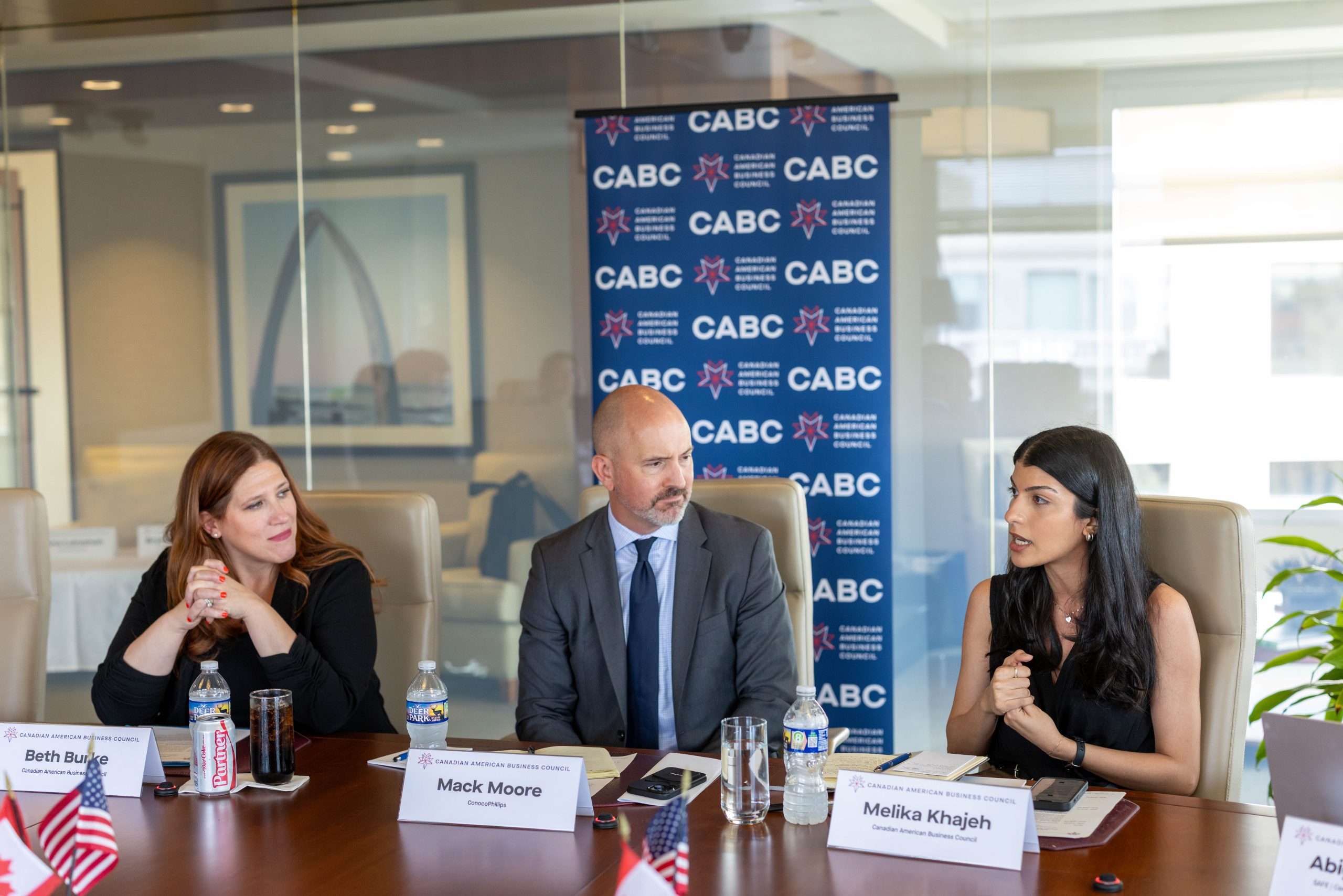
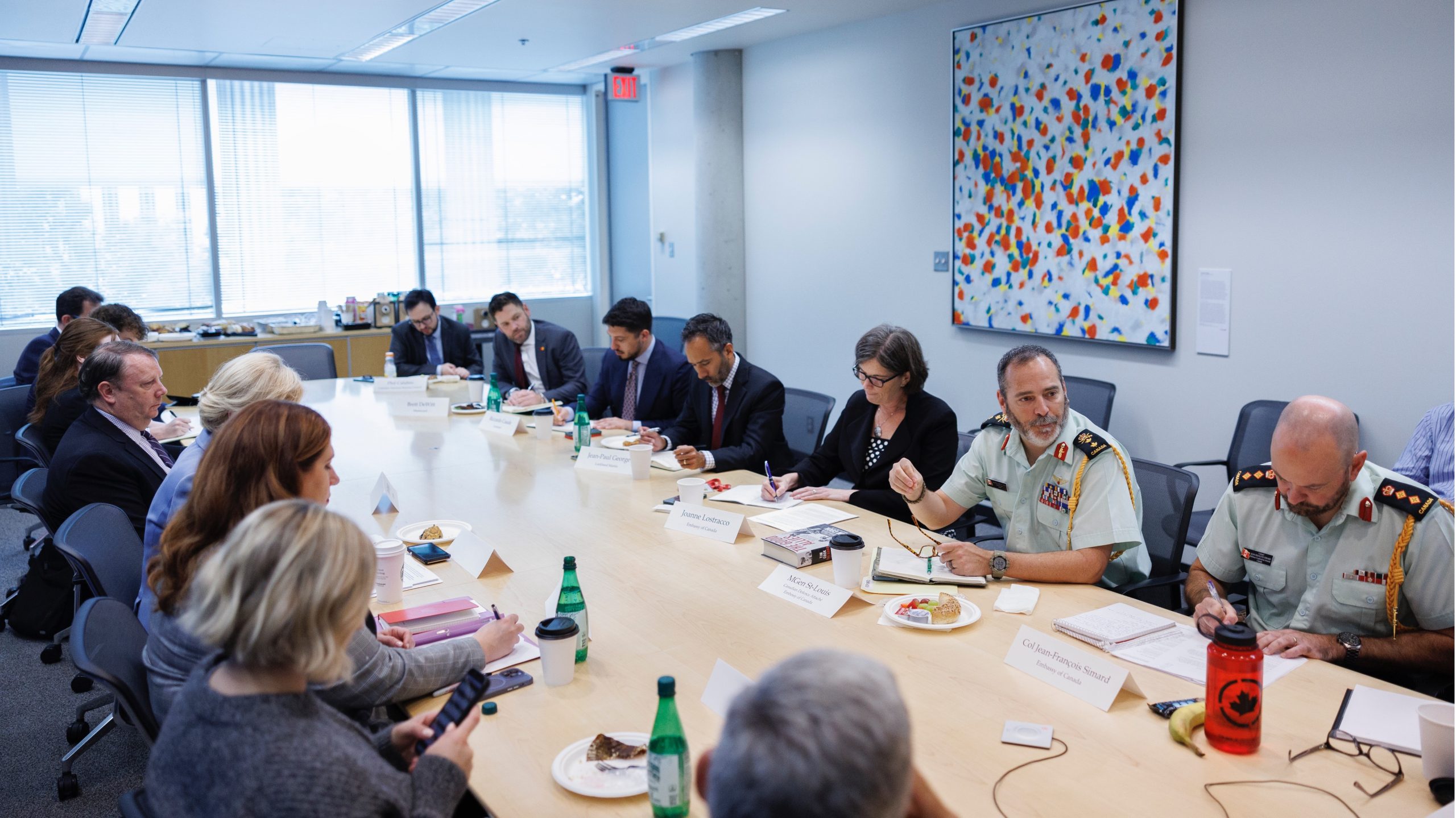
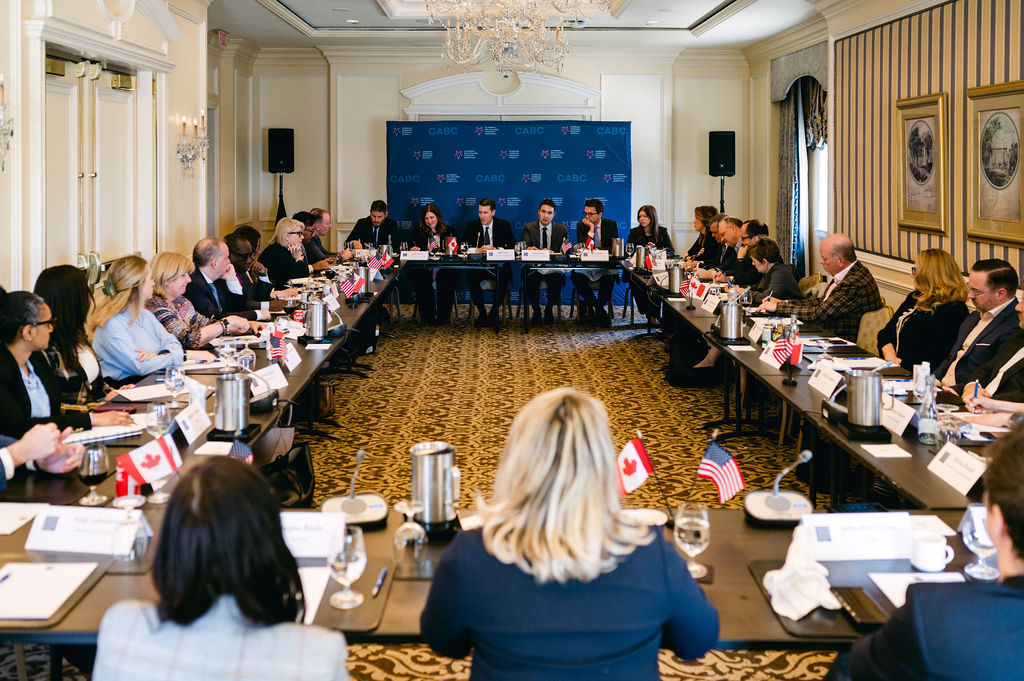
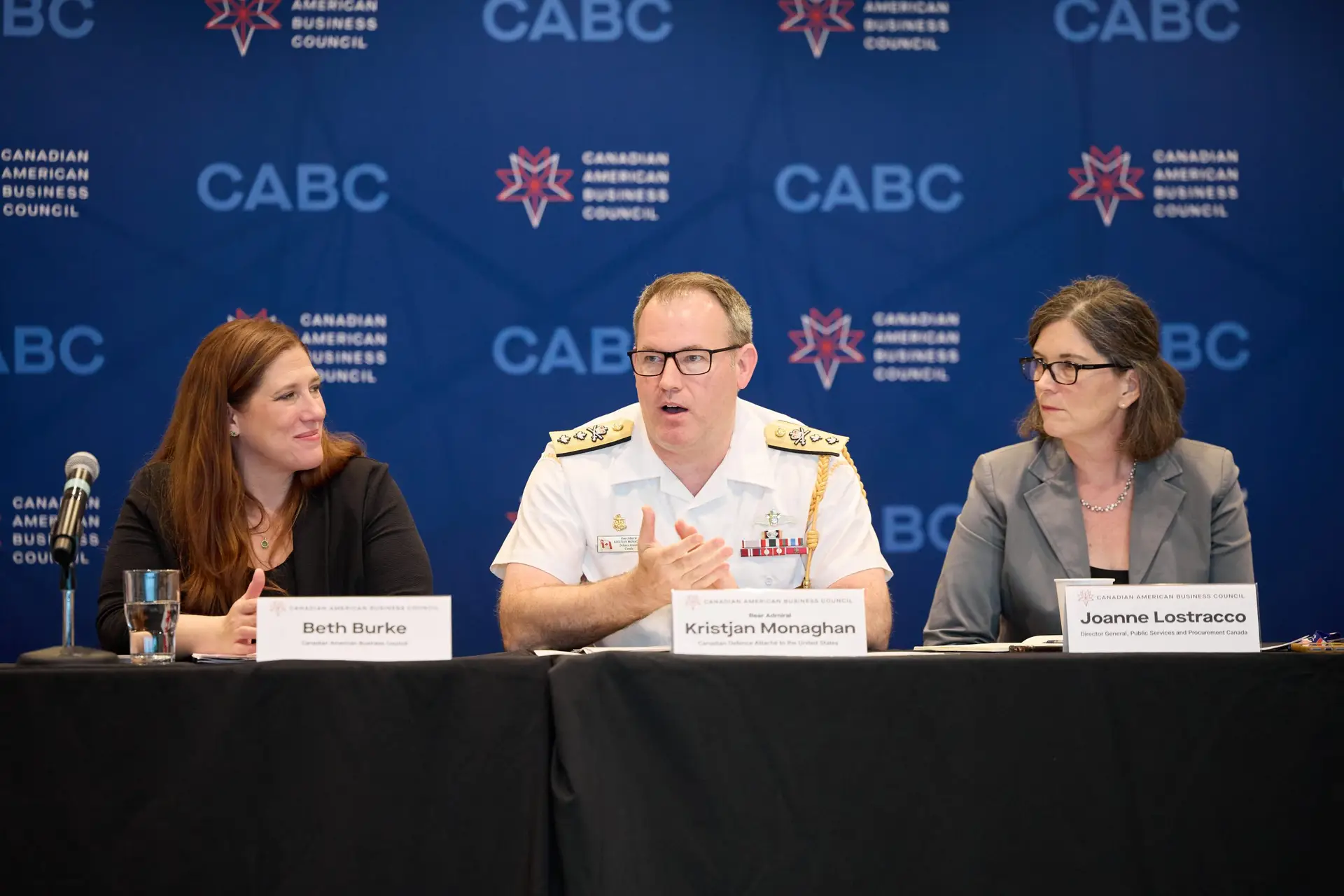
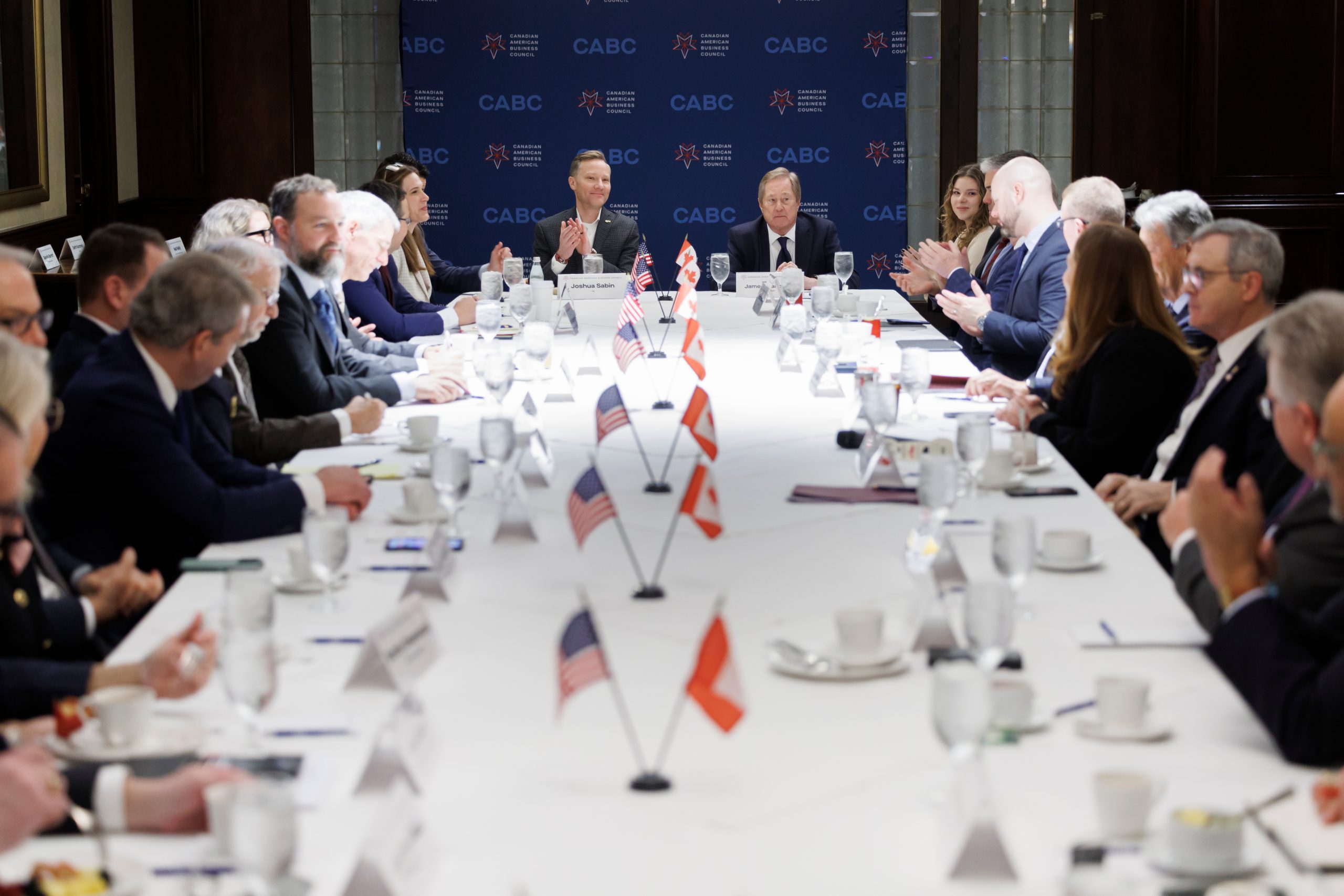
Through a robust lineup of programming throughout the year, the CABC provides members with opportunities to engage with key government officials on both sides of the border via our Congressional and Parliamentary Roundtable Series. Additionally, we host briefings and member-wide discussions on critical issues to drive meaningful dialogue and action.

Advocacy
The CABC regularly submits recommendations to governments on both sides of the border and serves as a key thought leader in helping the business community navigate the U.S.-Canada relationship.
Please contact Melika Khajeh, Director of Policy Research and Outreach, at mkhajeh@cabc.co for more information.